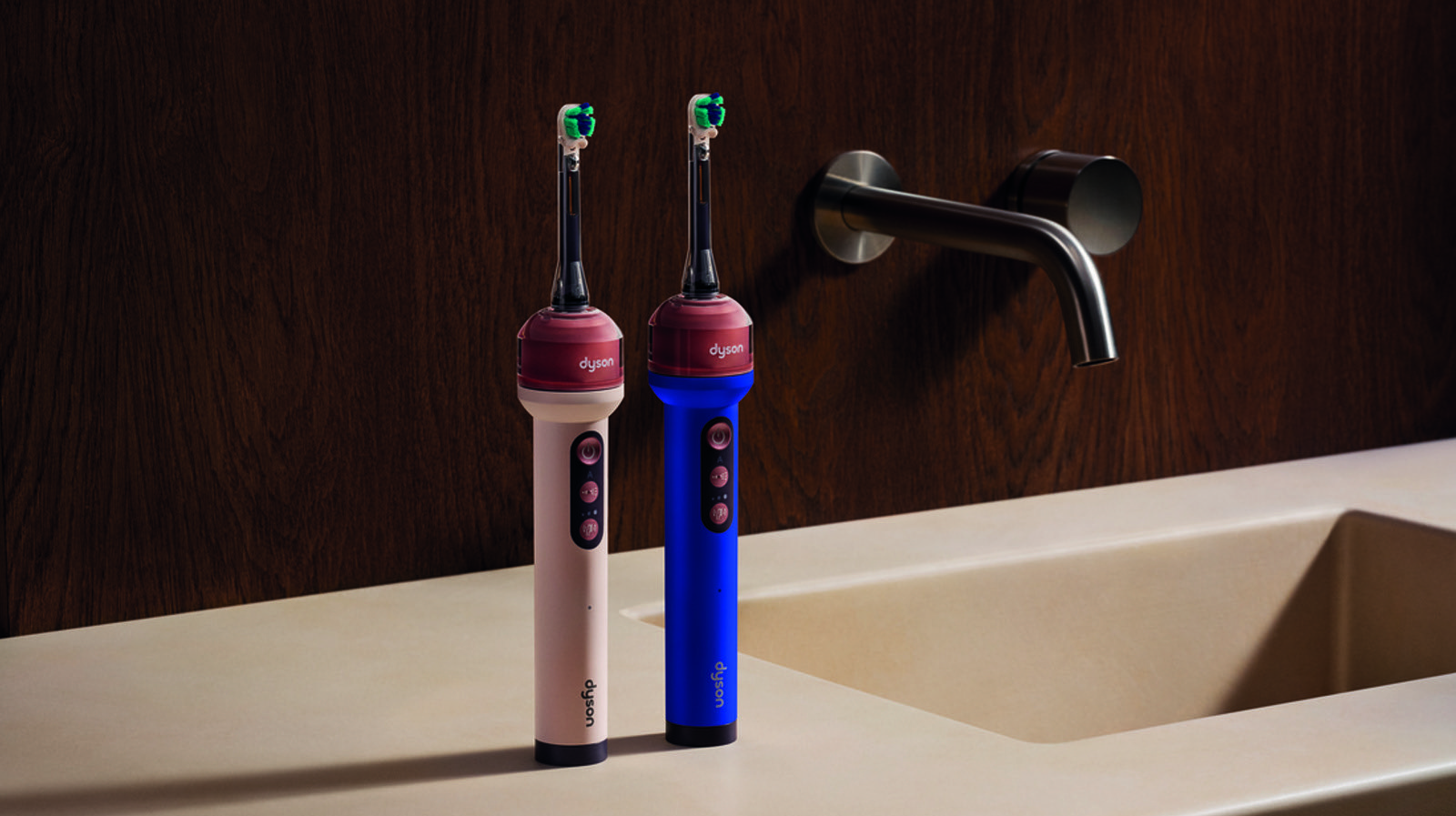
Dyson just launched a toothbrush that costs $499 to $500, depending on the source. The CameraJet packs a camera, a water tank and motors into a single device that brushes, flosses and rinses at once.
The engineering behind the price tag is real. Dyson says the device uses a '100k pixel macro lens camera' — about 0.1 megapixels — paired with 16 million lines of code and a machine-learning system trained on 470,000 dental images. The camera analyzes 28 live images per second and can trigger a jet of fluid within 100 milliseconds of spotting a gap between teeth, according to the company.
The water tank holds just 12.5 milliliters, roughly two and a half teaspoons, but Dyson built a docking station that refills it in three seconds flat. The company also says it spent years shaping the fluid stream itself, working with the National University of Singapore's Faculty of Dentistry over a five-year collaboration to develop a proxy plaque for testing. Fox Business reports Dyson's lab testing found the CameraJet removed nearly 70% more plaque in hard-to-reach areas than premium electric toothbrushes under certain test conditions.
Founder James Dyson framed the launch as a systems play, not a gadget stunt: 'By combining a camera, machine learning, precision fluid dynamics, advanced brushing technologies, connectivity and Wi-Fi, Dyson CameraJet introduces an entirely new way to keep your mouth healthy.'
Dyson is also selling its own SLS-free toothpaste and low-foaming mouthrinse for use with the device, plus a sensitive-teeth brush head with an RFID tag that tracks usage and flags replacement time. The companion MyDyson app offers live camera viewing, coverage maps and brushing feedback, and Dyson says no images are recorded or stored.
Here's the playbook for founders watching this launch. Dyson didn't discount its way into a new category — it engineered its way into pricing power. A five-year university partnership, half a million training images and a purpose-built refill dock are not cheap R&D lines, and Dyson isn't hiding the cost from the customer. It's charging for it.
That's the bet worth studying: customers will pay a premium multiple over a standard electric toothbrush when the product demonstrably does something competitors can't replicate quickly. The math is simple. If your margins depend on being the cheapest option, you're exposed the moment a bigger player enters your category. If your margins depend on defensible engineering, a five-year moat like Dyson's testing partnership becomes your best pricing defense.
Founders who get this right don't chase feature parity — they chase a technical claim a competitor can't match without years of their own investment. Dyson just spent five years and half a million images buying that claim. The $500 price is the invoice.